The integrated facility management industry is becoming increasingly data-driven and technology-enabled. As operations grow more complex and distributed across multiple sites, the need for efficient, consistent, and scalable employee training is more important than ever.
Artificial Intelligence is playing a growing role in how employees are onboarded, trained, and supported in their daily operational activities, helping organisations improve both training quality and operational performance.
Smart Access System as the core of digital training
At CEJS, the Smart Access System forms the foundation of our AI-supported approach to workforce education and operational knowledge management.
This system is designed to support:
- structured onboarding processes for new employees
- standardisation of training content across multiple locations
- fast and secure access to role-specific operational knowledge
- consistent application of procedures and service standards
By centralising knowledge and training materials in one digital environment, Smart Access System helps ensure that every employee receives the same level of operational preparation, regardless of location or experience level.
In addition, the system contributes to improved operational safety and site control by managing access permissions and supporting the secure movement of personnel across facilities.
The overall result is faster onboarding, better workforce readiness, and stronger alignment with operational excellence standards.
VR-based training for real-world preparation
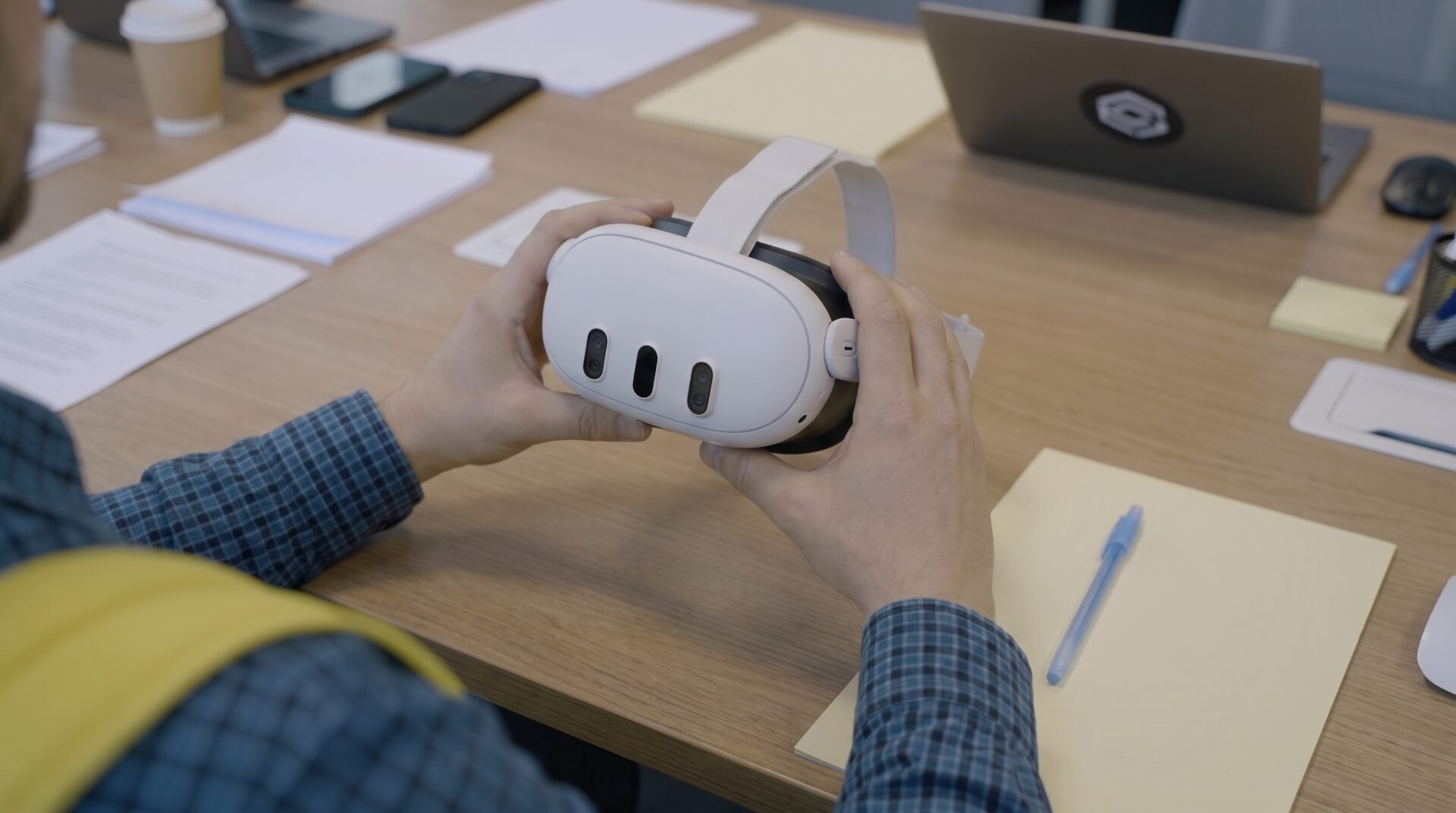
Virtual Reality (VR) technologies are increasingly used in workforce training across industrial and facility management environments.
In CEJS, VR is used as a supportive training layer that allows employees to experience realistic operational scenarios in a safe and controlled environment before entering live working conditions.
This approach is particularly valuable for:
- safety training and risk awareness
- onboarding in complex operational environments
- simulation of procedures and workflows
- preparation for high-standard service delivery
VR training improves understanding of processes, strengthens procedural awareness, and reduces the risk of errors during real operational tasks.
AI-driven learning in everyday operations
Beyond structured training systems, artificial intelligence also supports continuous learning in daily operational work.
AI enables employees to access information faster, understand procedures more clearly, and receive guidance when needed. This supports a more flexible and responsive learning environment, especially in multi-site operations where access to supervisors or trainers may be limited.
AI-driven tools help transform knowledge from static documentation into dynamic, accessible support available at the point of need.
Combining technology with operational experience
In Integrated Facility Management, the most effective training approaches combine digital tools with hands-on operational experience.
At CEJS, Smart Access System and VR training work together to create a structured learning ecosystem that supports employees from their first day through to full operational competence.
This approach ensures:
- consistent onboarding across all locations
- faster adaptation to operational standards
- improved safety and compliance awareness
- continuous development of workforce skills
Technology does not replace practical experience — it enhances it, making learning more structured, accessible, and efficient.
The future of workforce education in facility management
As facility management continues to evolve, AI-supported education tools will play an increasingly important role in shaping workforce capabilities.
The combination of structured digital knowledge systems, immersive VR training, and AI-supported learning processes enables organisations to build more resilient, skilled, and adaptable teams.
This supports not only operational efficiency, but also long-term service quality, safety, and sustainable growth across all managed facilities.