- Client: Logistics Center
- Location: Bratislava, Slovakia
- Industry: Logistics
- Year: 2024
Project Overview
Data-driven optimization of washroom consumables and dispenser systems
In a large-scale, 24/7 operating logistics facility, we partnered with the client to review and optimize washroom hygiene operations with a focus on cost efficiency, sustainability, and service continuity. The project aimed to reduce material waste, simplify replenishment processes, and improve overall operational performance without compromising user experience or hygiene standards.
To achieve this, a structured, multi-phase approach was implemented, combining dispenser footprint optimization, the introduction of more sustainable consumables, controlled testing of alternative dispensing systems, and a review of cleaning manhours. The first phase delivered measurable improvements in dispenser utilization and material efficiency, while the ongoing evaluation phase is helping define the most effective long-term solution for scalable, high-traffic environments.
The Challenge
Balancing hygiene standards, cost efficiency, and sustainability at scale
Managing washroom hygiene in a large, continuously operating logistics facility presents a unique set of operational and environmental challenges. With high daily footfall and a wide network of hygiene touchpoints, maintaining consistent product availability while controlling material usage and operational costs requires a carefully optimized system.
Over time, legacy dispenser layouts and standard consumable configurations led to inefficiencies in both material consumption and replenishment effort. At the same time, increasing pressure to improve sustainability and reduce environmental impact added further complexity – all while ensuring that any changes would not negatively affect user experience or service continuity.
Key operational and hygiene issues we needed to address:
- Extensive installed base of towel dispensers across multiple washroom and operational areas
- Over-served locations driven by legacy placement rather than actual demand
- High material consumption and frequent replenishment requirements
- Need to improve sustainability without disrupting daily operations
- Pressure to reduce operational costs while maintaining hygiene standards
Key issues:
- 24/7 operation – Continuous facility usage requiring uninterrupted hygiene availability
- 71 units – Large initial dispenser footprint across the site
- High refill frequency – Increased labor demand driven by standard-capacity consumables
Our Solution
A structured, multi-workstream approach to hygiene optimization
To address the identified challenges, a comprehensive optimization program was implemented, combining data-driven analysis with controlled testing and operational adjustments. The approach focused on improving efficiency, reducing waste, and building a scalable framework for long-term decision-making across washroom hygiene operations.
Dispenser network optimization
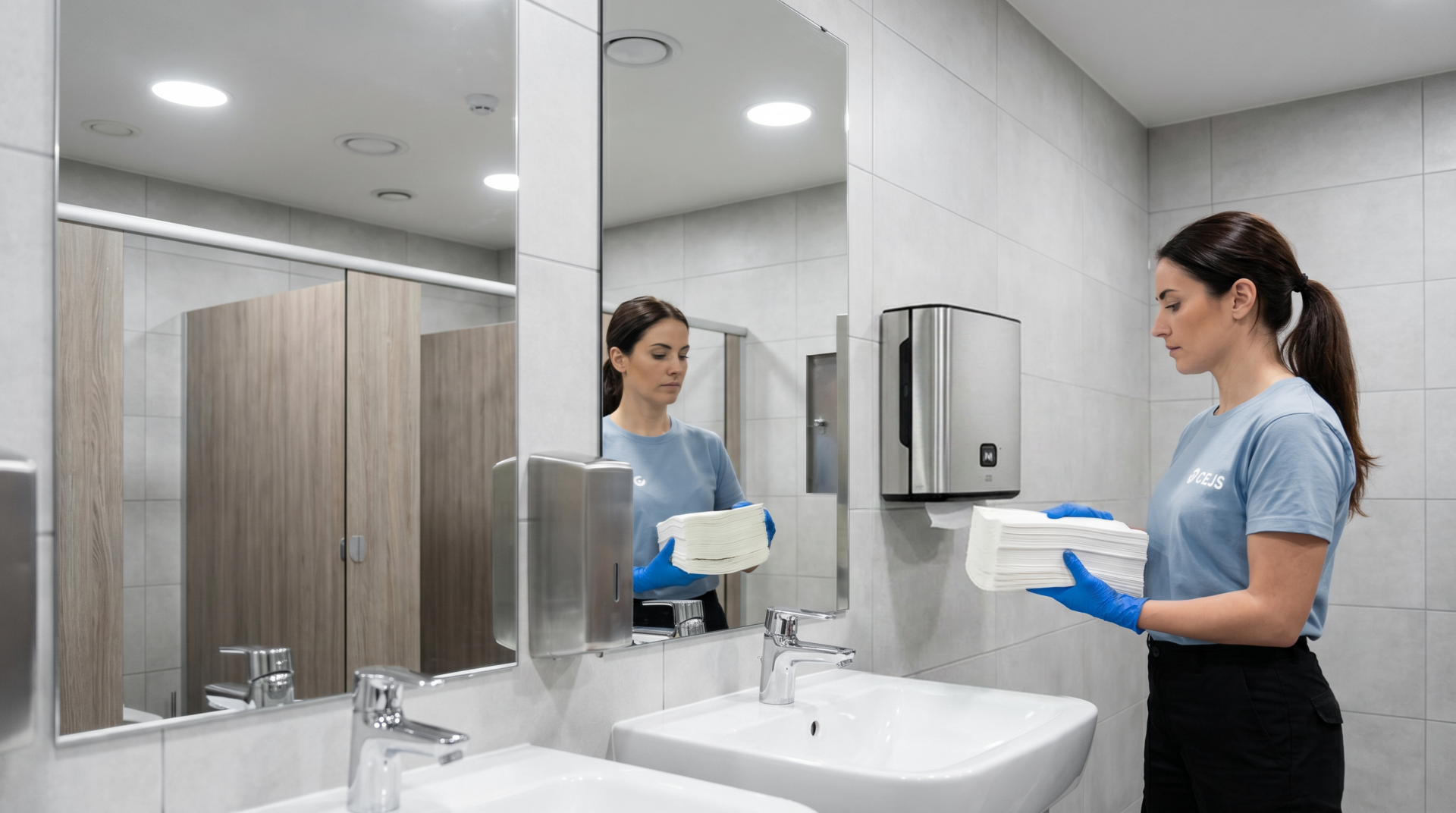
A detailed site-level assessment of dispenser usage was conducted to identify over-served areas and align the dispenser footprint with actual demand. Redundant units were removed while maintaining full user accessibility and service continuity across all operational zones.
Sustainable consumables transition
Where possible, the existing infrastructure was retained and complemented with a shift toward hygiene consumables manufactured from recycled materials. This enabled a reduction in virgin resource usage while maintaining required hygiene standards and compatibility with current systems.
Controlled system testing and replenishment efficiency
Higher-capacity consumables and alternative dispensing systems were introduced and tested under comparable, real-life operating conditions. This allowed for a direct comparison of performance across key metrics such as material consumption, refill frequency, dispensing control, and overall cost efficiency.
Cleaning manhours revision
Cleaning scope and frequency were reviewed in selected low-traffic areas to assess the operational impact of dispenser optimization. The evaluation included monitoring user feedback, measuring cleaning time requirements, and validating whether adjusted cleaning routines remained sufficient after reducing the number of installed units.
Results & Impact
Clear, measurable improvements across efficiency, cost, and sustainability
27% reduction in dispenser footprint
Installed base reduced from 71 to 52 units while maintaining full service coverage aligned with real usage patterns.
~50% reduction in refill time (draft estimate)
Higher-capacity consumables (160 m → 300 m) significantly reduced replenishment frequency and operational effort.
~55% lower material consumption (automatic MATIC vs. manual MATIC)
Controlled testing showed substantial material savings in like-for-like conditions compared to manual dispensing.
19 dispensers removed without service disruption
Optimization removed redundant units while maintaining availability and user access across all washroom areas.
Improved operational efficiency across 24/7 site
Reduced refill workload and more predictable replenishment cycles supported smoother day-to-day operations.
No reported impact on user experience or availability
Service continuity and hygiene standards were fully maintained throughout and after the optimization phase.

 Operational Perspective
From an operational point of view, the project clearly showed that even relatively simple adjustments in dispenser footprint and consumable strategy can generate meaningful efficiency gains at scale. The reduction in dispenser count and the introduction of higher-capacity formats directly translated into fewer refills, lower material usage, and a more predictable maintenance routine. At the same time, it was important for us that these changes did not affect service continuity or user experience – and in practice, no operational disruptions or negative feedback were observed. This gives us confidence that a more standardized and data-driven approach to dispenser management can be safely extended to other areas of the site.
Contact
Ready to optimize your hygiene operations?
Talk to our team about reducing costs, waste, and operational effort in your facility.
READ NEXT