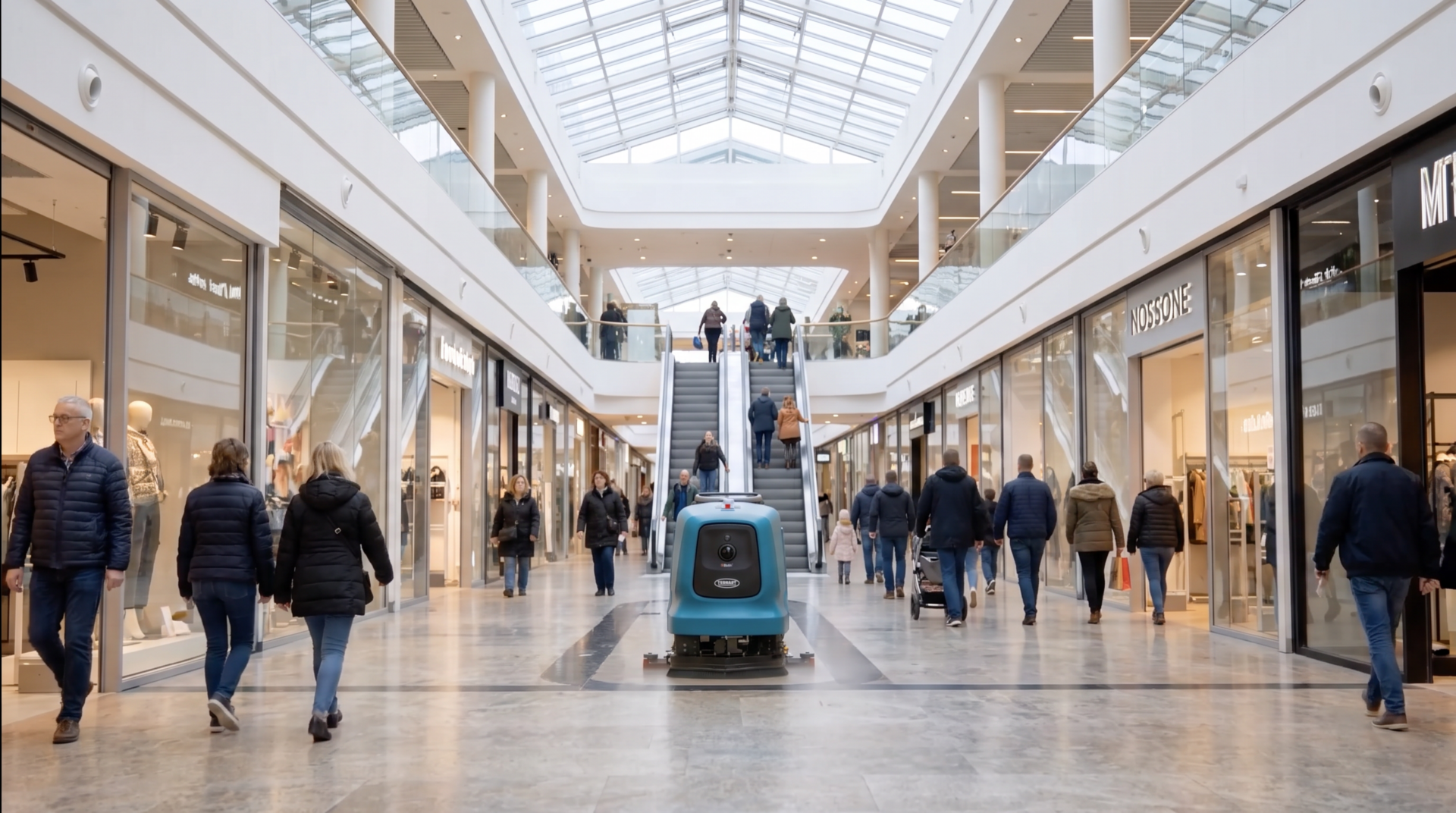
A shopping center never stands still. Thousands of visitors move through entrances, shopping galleries, food courts, offices, parking areas, and retail spaces every day. Each of these environments presents different cleaning requirements, traffic patterns, floor types, and operational challenges.
For facilities of this scale, autonomous cleaning is rarely based on a single solution. The most effective approach combines different technologies into one coordinated ecosystem, where each autonomous robot supports the environment it is best suited for. Together with cleaning professionals, these technologies create a more efficient, flexible, and scalable operating model.
Different spaces require different solutions
High-traffic public areas such as entrances, food courts, cafés, and shopping galleries require compact, agile robots that can operate safely around visitors throughout the day. Their role is to help maintain cleanliness without interrupting the flow of daily operations.
Large corridors and service routes demand a different approach. Here, autonomous technologies support consistent cleaning across extensive floor areas by following planned routes and maintaining productivity during long operating hours.
Offices, meeting rooms, staff facilities, and lounge areas require quieter solutions designed for indoor environments where regular vacuuming and routine maintenance can be performed with minimal disruption.
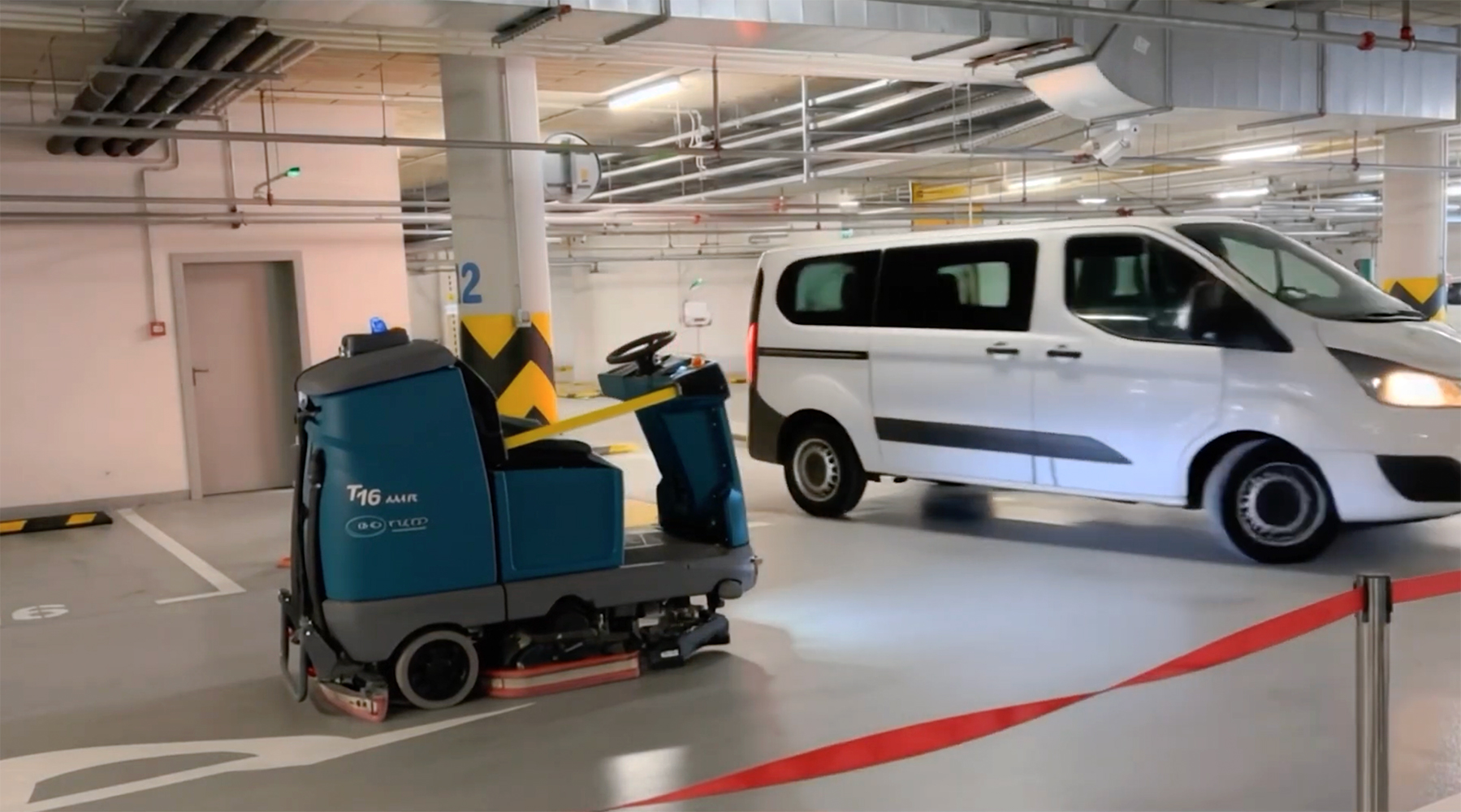
Parking garages present another set of operational challenges. Dust, mud, tyre residue, standing water, and seasonal contaminants require more robust equipment capable of handling demanding surfaces and heavier cleaning workloads.
Glass entrances, storefronts, and other highly visible surfaces also benefit from dedicated autonomous solutions. By supporting repetitive cleaning tasks in these areas, automation helps improve safety while maintaining a consistently professional appearance.
One ecosystem, one operational strategy
The value of autonomous cleaning does not come from a single robot. It comes from selecting the right technologies for the right environments and managing them as one coordinated operational system.
Within a well-designed autonomous ecosystem, every device supports a clearly defined task while cleaning professionals oversee operations, perform detailed cleaning, respond to unexpected situations, and maintain consistent service quality across the facility.
This integrated approach helps shopping centres:
- maintain consistent cleanliness throughout the day,
- increase cleaning frequency without proportional labour growth,
- allow cleaning teams to focus on higher-value tasks,
- reduce repetitive manual work,
- improve operational visibility through digital reporting,
- adapt cleaning technologies to the specific requirements of each facility.
Why a tailored approach matters
Every shopping centre operates differently. Layout, visitor flows, opening hours, floor materials, seasonal conditions, and service priorities all influence how cleaning should be planned and delivered.
Rather than relying on a one-size-fits-all solution, autonomous cleaning should be designed around the operational realities of each facility. Selecting the right combination of technologies helps ensure that every area receives the level of support it requires while making the best use of available resources.
A well-designed autonomous cleaning ecosystem brings together suitable technologies, operational data, efficient workflows, and human expertise into one coordinated model. The result is a solution that supports day-to-day operations while remaining flexible enough to evolve with changing facility needs.
Smarter facilities start with the right technology mix
Autonomous robots are becoming an integral part of modern facility management because they help solve everyday operational challenges. Rather than replacing cleaning professionals, they support teams by taking over repetitive tasks and allowing staff to focus on work that requires experience, flexibility, and human judgement.
For shopping centres, the outcome is clear: cleaner spaces, more efficient operations, better use of resources, and an improved experience for every visitor.
Stay informed